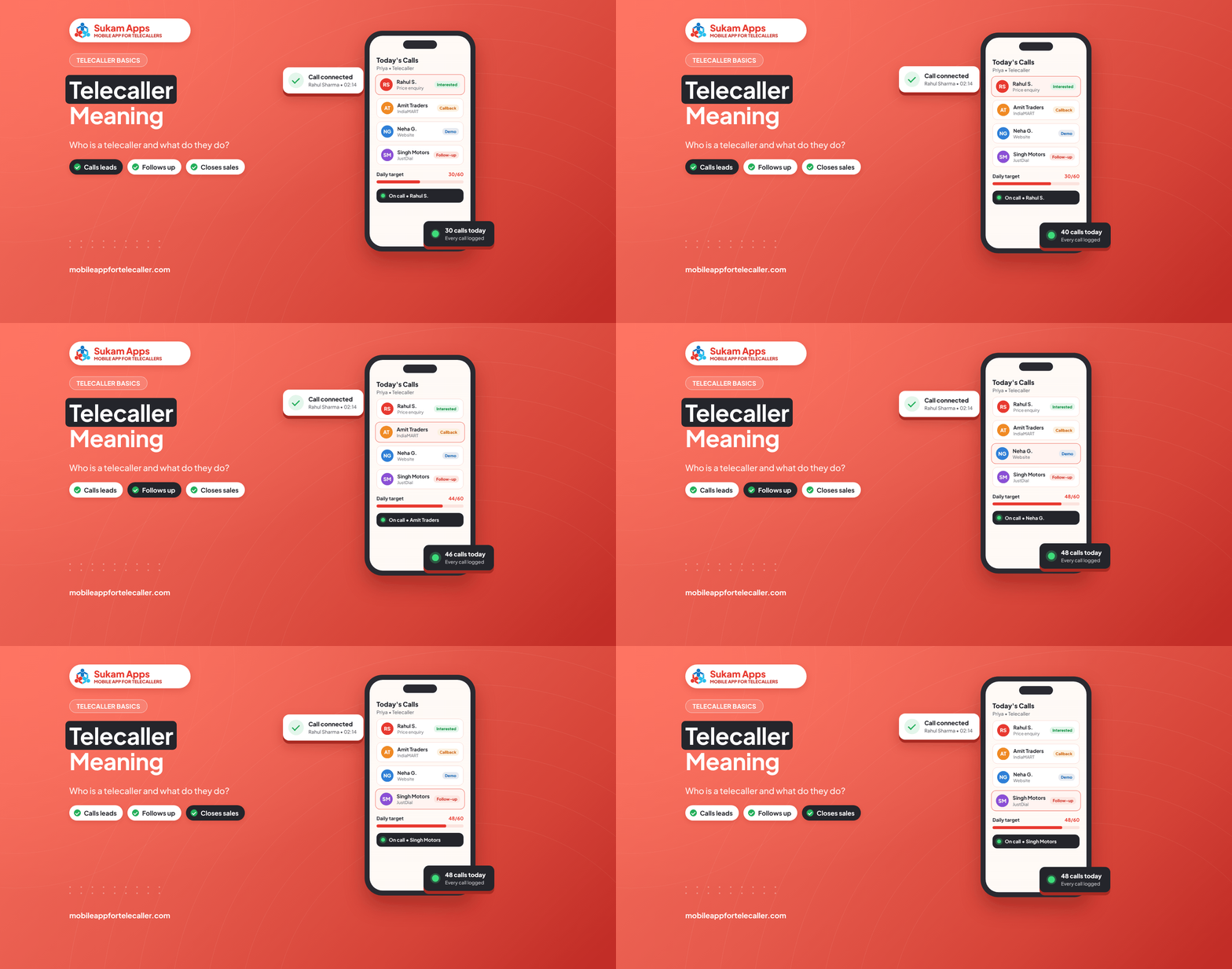
Telecalling (also written tele calling or tele-calling) is the process of contacting customers and prospects by phone to generate sales, follow up on enquiries, book appointments, collect payments or give support. The person who does it is a telecaller. In India, telecalling is how most small and mid-sized businesses turn enquiries from websites, portals, ads and walk-ins into paying customers.
What is tele calling in simple words?
Tele calling means doing business over phone calls instead of face-to-face meetings. A business gets a list of people who may be interested, and a telecaller calls them one by one, explains the offer, answers questions and moves the interested ones to the next step.
In Hindi you can say: telecalling ka matlab hai phone par grahakon se baat karke product bechna, enquiry ka follow-up karna ya unki madad karna.
Types of telecalling
Outbound telecalling
The business calls the customer. Examples: calling property-portal leads, admission enquiries, insurance renewals, loan eligibility checks and B2B follow-ups. Most SME telecalling teams are outbound.
Inbound telecalling
The customer calls the business, for example after seeing an ad or a missed-call campaign. The telecaller answers, qualifies the caller and books the next step.
Telesales vs telemarketing vs tele support
| Term | Main goal | Typical measure |
|---|---|---|
| Telesales | Close the sale on the call | Revenue, conversions |
| Telemarketing | Create interest and generate leads | Interested leads, appointments |
| Tele support | Solve problems for existing customers | Resolution time, satisfaction |
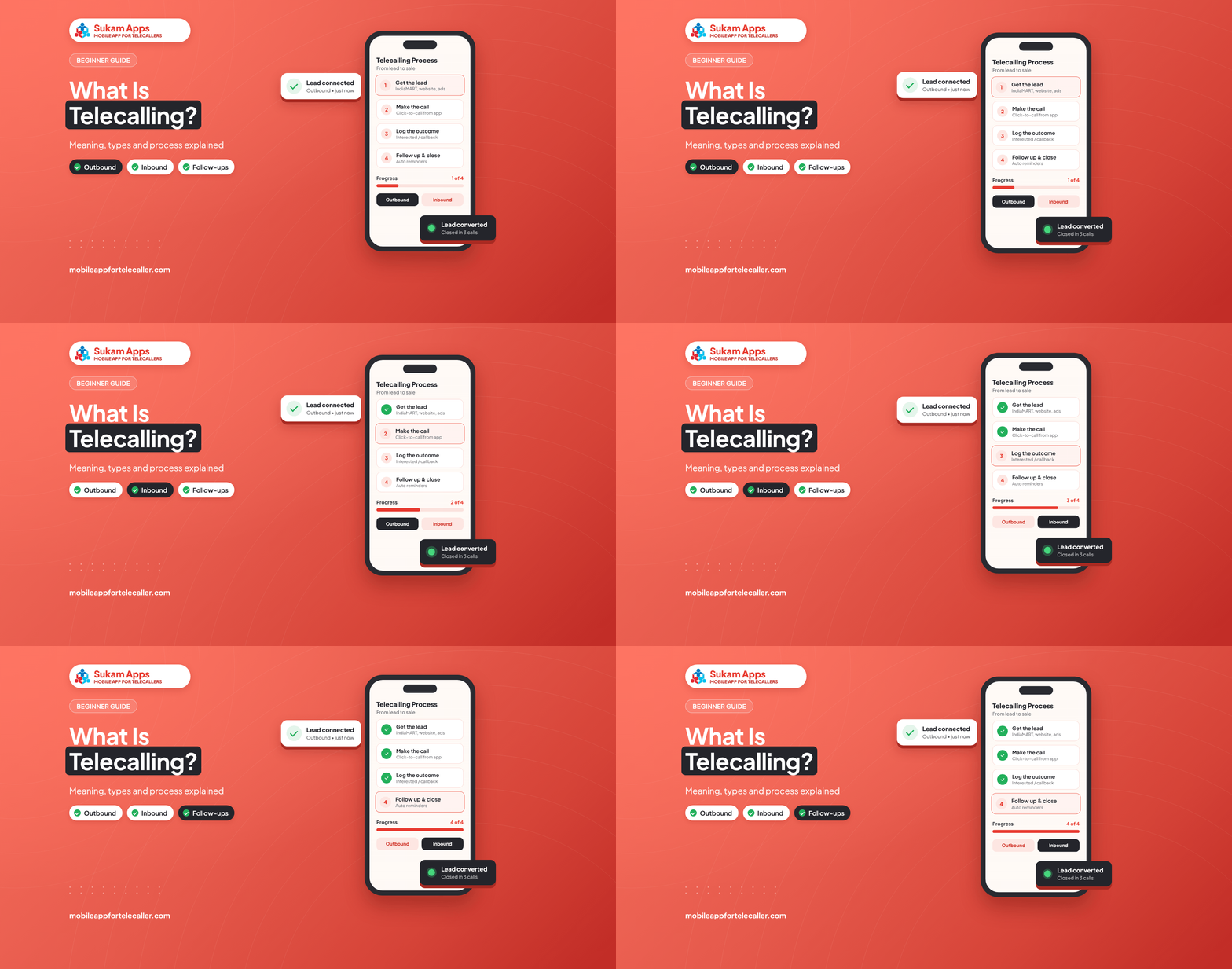
How the telecalling process works
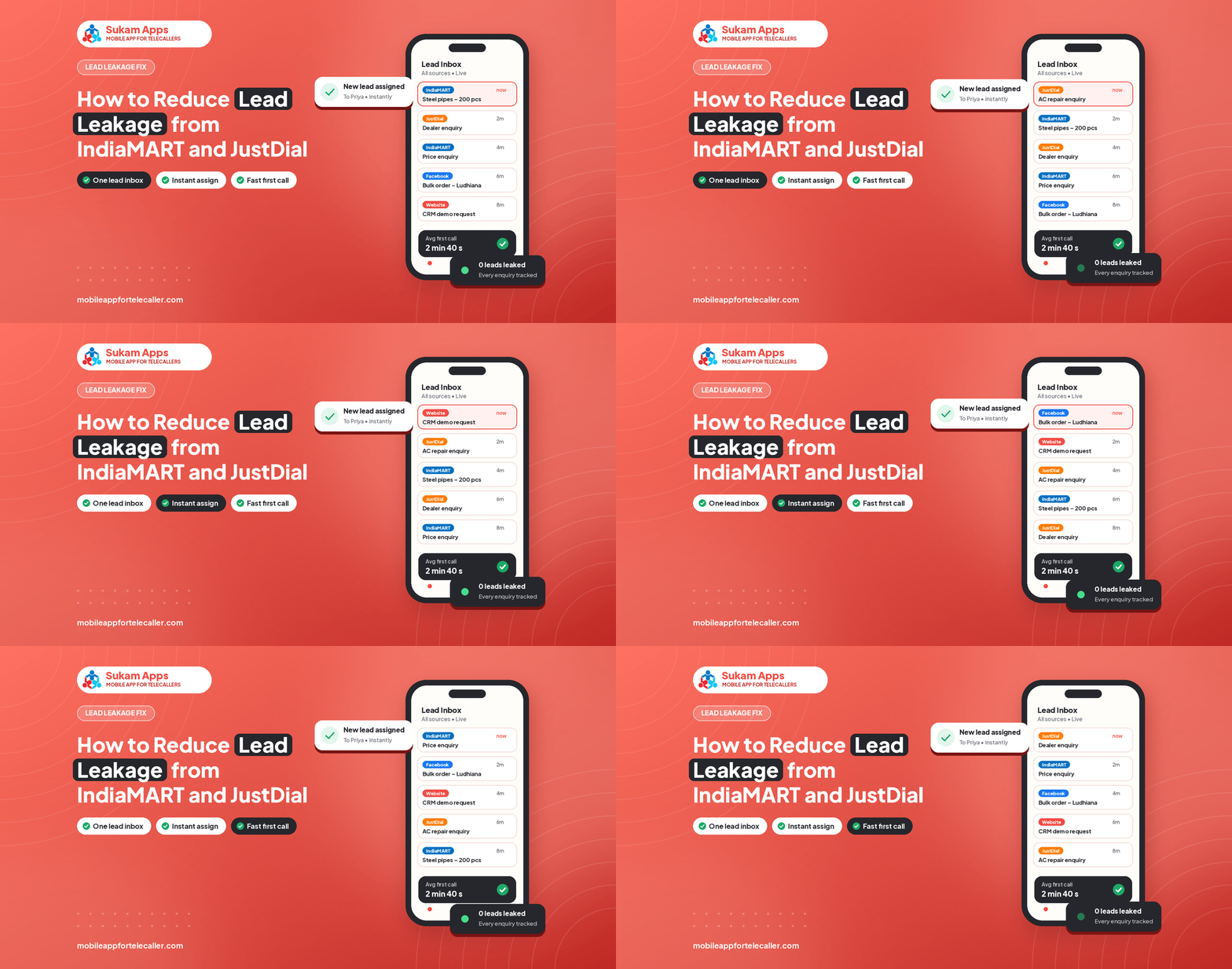
- Leads come in from your website, Facebook or Google ads, IndiaMART, Justdial, property portals, walk-ins or referrals.
- Leads are assigned to telecallers, by rotation or by skill. See lead distribution methods.
- First call quickly. The chance of reaching an enquiry drops fast after the first few minutes; read our note on responding to IndiaMART leads in the first 5 minutes.
- Qualify and pitch using a short script. We have ready scripts for real estate, education admissions and loan DSA.
- Record the result of every call and set the next follow-up date.
- Follow up on a fixed cadence by call and WhatsApp. A 7-touch follow-up plan works well for most teams.
- Review daily with a telecaller daily report: dials, connected calls, talk-time and outcomes.
Key telecalling metrics
- Dials per day: total calls attempted by each telecaller.
- Connected calls: calls where the customer actually picked up.
- Talk-time: total minutes spent talking to customers.
- Follow-ups due vs done: are callbacks happening on time?
- Conversion: leads turned into appointments, visits or sales.
More detail in telecaller performance KPIs.
Tools needed for telecalling
You can start telecalling with a phone and an Excel sheet, but it breaks down quickly: numbers get dialed twice, follow-ups are forgotten, and the owner cannot see who actually called. Most growing teams move to a telecalling CRM that adds:
- One-tap or automatic dialing with an auto dialer.
- Automatic call logs and call recording linked to each lead.
- Follow-up reminders and WhatsApp templates after the call.
- Live call tracking for employees, so managers see calls, talk-time and recordings without asking.
Read Excel vs CRM for telecalling teams to decide when to switch.
Is telecalling legal in India?
Yes. Calling people who have enquired about your product or have a business relationship with you is normal business activity. TRAI rules restrict unsolicited commercial calls and messages, especially to numbers registered on the Do Not Disturb (DND) list, and bulk robo-calling. Call genuine leads, respect requests not to be called, and follow a clear call recording policy. This is general information, not legal advice.
How to start telecalling for your business
- Decide the goal of each call (appointment, demo, visit, payment).
- Write a 60-second script and a list of common objections with answers.
- Hire or assign telecallers who speak your customers’ language.
- Put all leads in one system, not in personal phones and notebooks.
- Set daily targets for dials, connected calls and follow-ups.
- Review recordings weekly and coach on real calls.
Frequently asked questions
What is tele calling job?
A telecalling job means calling customers or leads on the phone for a company, to sell, follow up, book appointments or give support, and updating the result of each call.
What is the difference between telecalling and cold calling?
Cold calling is calling people who have not enquired before. Telecalling is broader and, in most Indian SMEs, mostly means calling warm leads who have already shown interest.
Can telecalling be done from a mobile phone?
Yes. With a SIM-based telecaller app, telecallers call from their own Android phone while calls, recordings and follow-ups are tracked in the company’s CRM.
How many calls does a telecaller make in a day?
Usually 80 to 150 dials, depending on the industry, lead quality and whether an auto dialer is used.
Run your telecalling on one app
Sukam Tele CRM is a SIM-based telecalling app for Indian teams: auto dialer, call recording, lead management, WhatsApp follow-ups and live reports, with on-site setup and training. Start your 7-day free trial or see pricing.