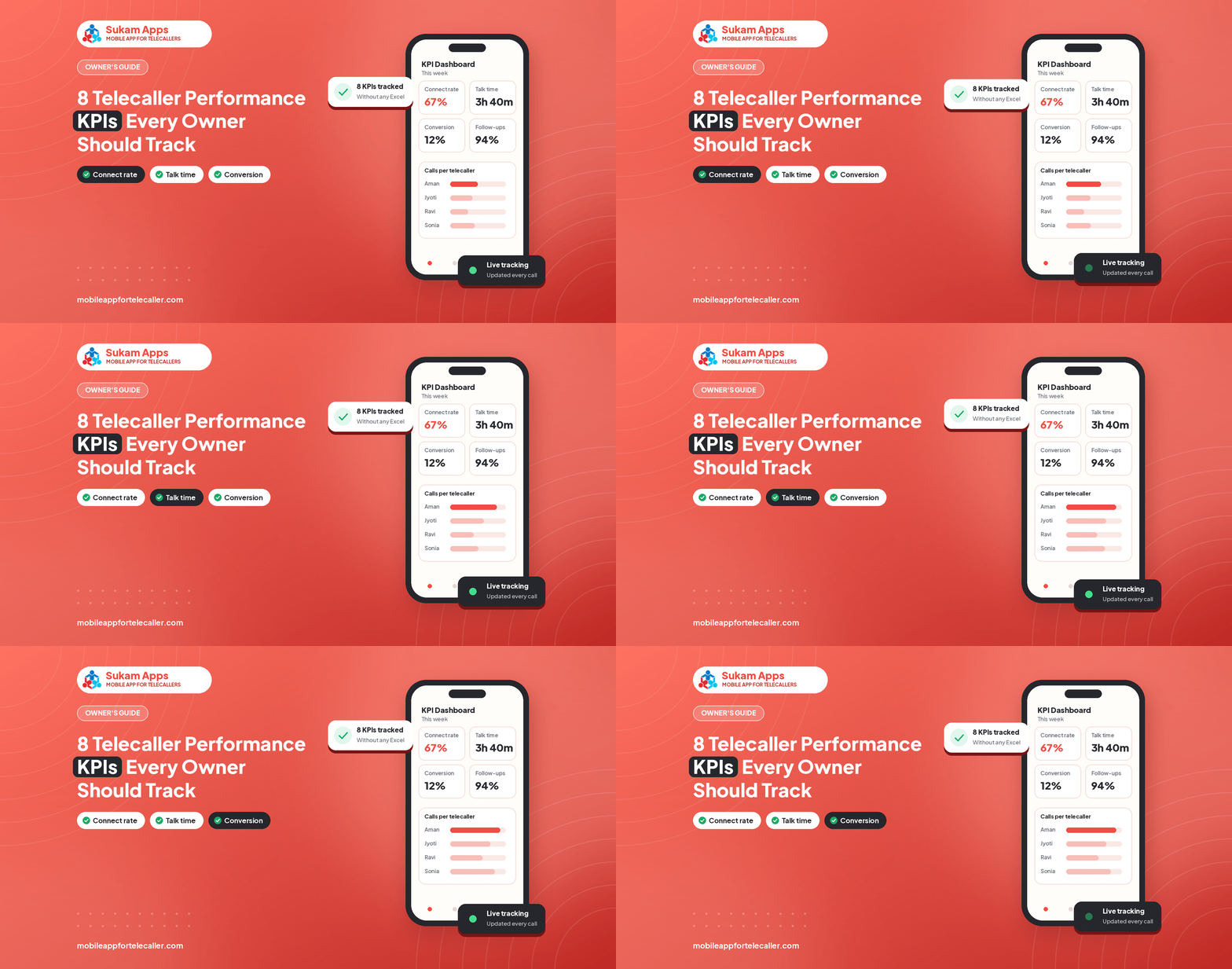
Counting calls alone rewards speed over quality. A balanced scorecard of eight numbers shows who is working, who needs coaching and which lead sources are worth paying for.
1. Calls dialed
The effort number. Useful as a base, misleading alone.
2. Connect rate
Connected calls divided by dialed. Low rates point to bad lists or bad calling hours.
3. Talk-time
Total and average talk-time. Very short average calls suggest weak pitching; very long ones may mean wandering conversations.
4. Fresh lead coverage
What share of new leads got a first call the same day. Speed of first response often decides who wins the lead.
5. Follow-up discipline
Follow-ups done on the due date divided by follow-ups due. This is the best predictor of closed deals in long sales cycles.
6. Interested-to-meeting rate
Of the leads marked interested, how many became a meeting, demo or site visit.
7. Conversion rate
Closed deals divided by connected leads, by telecaller and by lead source.
8. Quality score
A manager score from listening to three recordings per telecaller per week against a simple checklist: greeting, listening, offer clarity, next step.
How to use the scorecard
- Compare telecallers on the same lead source, not different ones.
- Review weekly, not daily; daily numbers swing.
- Pair every number with a coaching action.
- Ignore vanity metrics that nobody can act on.
Getting these eight from manual sheets is slow. A call-tracking CRM builds them automatically from the call log and CRM statuses, which also stops numbers from being inflated.
See this running on your own lead list
Sukam Tele CRM runs on your telecallers’ own SIMs: auto dialer, call recording, follow-ups and a live owner dashboard. 7-day free trial, setup done by our team.
Related: Employee call tracking app · Daily report format