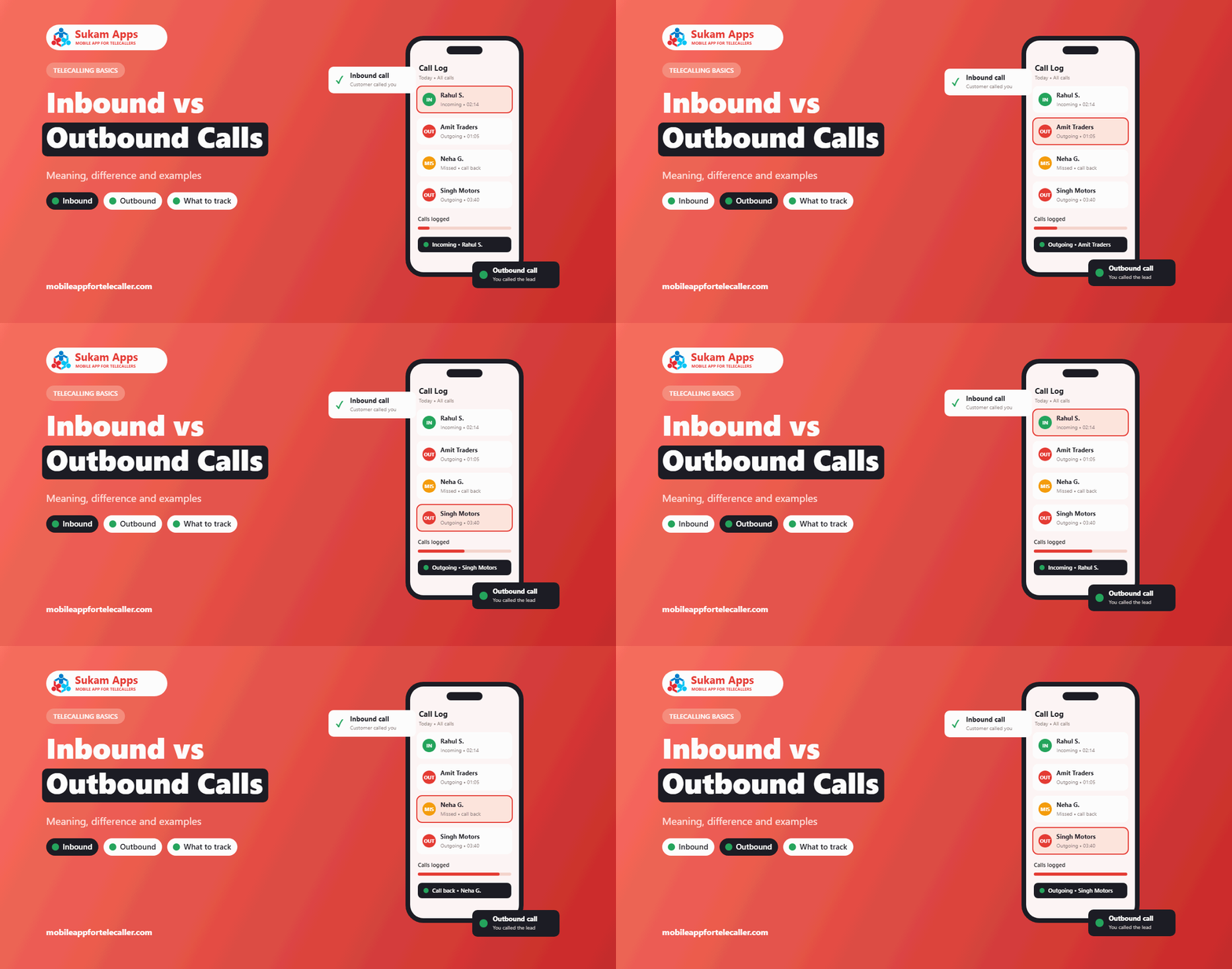
Inbound vs outbound calls in one line: an inbound call comes in to your business from a customer, and an outbound call goes out from your team to a customer or lead. In Hindi, inbound call ka matlab hai customer ne aapko call kiya, aur outbound call ka matlab hai aapki team ne customer ko call kiya.
The difference looks small, but it changes everything: who you hire, what script they use, which numbers you track and which tool the team needs. This guide explains both in simple words, with Indian business examples.
Meaning of inbound and outbound calls
What is an inbound call?
An inbound call is any call that a customer or prospect makes to your business number. The customer chooses the time and the topic. Typical reasons are a product enquiry after an advertisement, an appointment or booking, an order status check, a complaint or a call-back after a missed call.
What is an outbound call?
An outbound call is any call your team makes to a customer or lead. The business chooses the time and the topic. Typical reasons are calling fresh leads, follow-ups, payment and renewal reminders, feedback calls and cold calls to a purchased or collected list. This is the daily work of most telecallers. See telecaller meaning and what is telecalling for the basics.
Difference between inbound and outbound calls
| Point | Inbound calls | Outbound calls |
|---|---|---|
| Who starts the call | Customer | Your telecaller |
| Main purpose | Enquiry, booking, support, complaint | Sales, follow-up, reminder, feedback |
| Customer mood | Already interested or needs help | Not expecting the call |
| Main skill | Listening and product knowledge | Opening line and objection handling |
| Script style | Question-and-answer, flexible | Structured pitch with a clear next step |
| Biggest risk | Missed or unanswered calls | Low connect rate and rejection |
| Key numbers | Missed calls, answer time, call-back time | Dials, connected calls, talk-time, conversions |
| Common tools | IVR or business number, call popup, call recording | Auto dialer, lead list, follow-up reminders, call recording |
Inbound call examples
- A parent calls a coaching institute after seeing a hoarding and asks about fees and batch timing.
- A patient calls a clinic to book an appointment for tomorrow.
- A dealer calls a manufacturer found on IndiaMART or TradeIndia to ask for a quotation.
- A customer calls back after seeing a missed call from your telecaller.
- A buyer calls a real estate office number printed on a project banner.
The rule for inbound is simple: never miss the call, and never ask the customer to repeat everything. A call popup that shows the caller’s name and last conversation solves the second part.
Outbound call examples
- A real estate telecaller calls leads from a property portal to fix site visits.
- A study visa counsellor calls students who filled a form on Facebook or Instagram.
- An insurance executive calls customers 15 days before the policy renewal date.
- A loan DSA telecaller calls to collect pending documents.
- A showroom calls old customers about a festival exchange offer.
Outbound works on volume and discipline. Most sales close between the second and fifth call, so follow-ups matter more than the first pitch. Useful reads: call scripts for telecallers, how to convince a customer on a call and how many calls a telecaller should make per day.
Inbound and outbound calling: which one does your business need?
- Mostly inbound: clinics, service centres, restaurants, hotels and shops that advertise a phone number.
- Mostly outbound: real estate, education and study visa, insurance, loans, B2B software and any business that buys or generates leads.
- Both (most businesses): you call the lead, the lead calls back later, and the same telecaller should handle it with full history.
In small Indian teams of 3 to 20 telecallers there is rarely a separate inbound and outbound department. The same person does both from the same SIM. So the real question is not “inbound or outbound”, it is “can the owner see every call, in both directions, without asking for a report?”
What to track for inbound and outbound calls
| Inbound | Outbound |
|---|---|
| Missed calls and how fast they were called back | Total dials and connected calls |
| Calls answered per telecaller | Talk-time per telecaller |
| Reason for the call (enquiry, support, complaint) | Call result (interested, call back, not interested) |
| Enquiries converted to bookings or sales | Follow-ups due, done and missed |
| Recordings for quality checks | Recordings for training and disputes |
A ready format is in our telecaller daily report format guide.
Tools for inbound and outbound calling
- SIM-based telecaller app: works on the telecaller’s own Android phone and SIM, logs incoming and outgoing calls automatically and keeps recordings.
- Auto dialer: dials the next lead automatically, so outbound teams make more calls per hour.
- Call popup: shows who is calling and the last remark before the telecaller picks up.
- Follow-up reminders: so no promised call-back is forgotten.
- Cloud IVR or a business number: useful when many inbound calls come on one advertised number and need to be routed. Compare both in SIM-based dialer vs cloud telephony.
Sukam Tele CRM covers both directions on the telecaller’s own SIM: every incoming, outgoing and missed call is logged with its recording, leads and follow-ups are in the same app, and the owner sees live employee call tracking. The app is Android-only and call recording storage is unlimited.
Frequently asked questions
What is the difference between inbound and outbound calls?
An inbound call is started by the customer, who calls the business. An outbound call is started by the business, whose telecaller calls the customer or lead. Inbound is mostly service and enquiries; outbound is mostly sales, follow-ups and reminders.
Is telecalling inbound or outbound?
Most telecalling in Indian small and medium businesses is outbound: calling leads, following up and reminding customers. The same telecaller often also receives call-backs, so the role is usually a mix of both.
Which is harder, inbound or outbound calling?
Outbound is usually harder because the customer is not expecting the call and rejection is common. Inbound needs more product knowledge and patience, because the caller often has a problem to solve.
What is an example of an inbound call?
A parent calling a coaching institute to ask about fees, a patient calling a clinic for an appointment, or a customer calling a showroom after seeing an advertisement are all inbound calls.
What is an example of an outbound call?
A telecaller calling a lead from a property portal to fix a site visit, an insurance executive calling about a renewal, or a recovery agent reminding a customer about an EMI are all outbound calls.
Can one telecaller handle both inbound and outbound calls?
Yes. In most small teams the same person does both. A telecaller app with call popup and follow-up reminders helps, because the telecaller sees who is calling and what was discussed last time.
See every inbound and outbound call of your team
Start a 7-day free trial of Sukam Tele CRM, or call or WhatsApp us on 99142 49191 for a quick demo in Hindi, Punjabi or English.