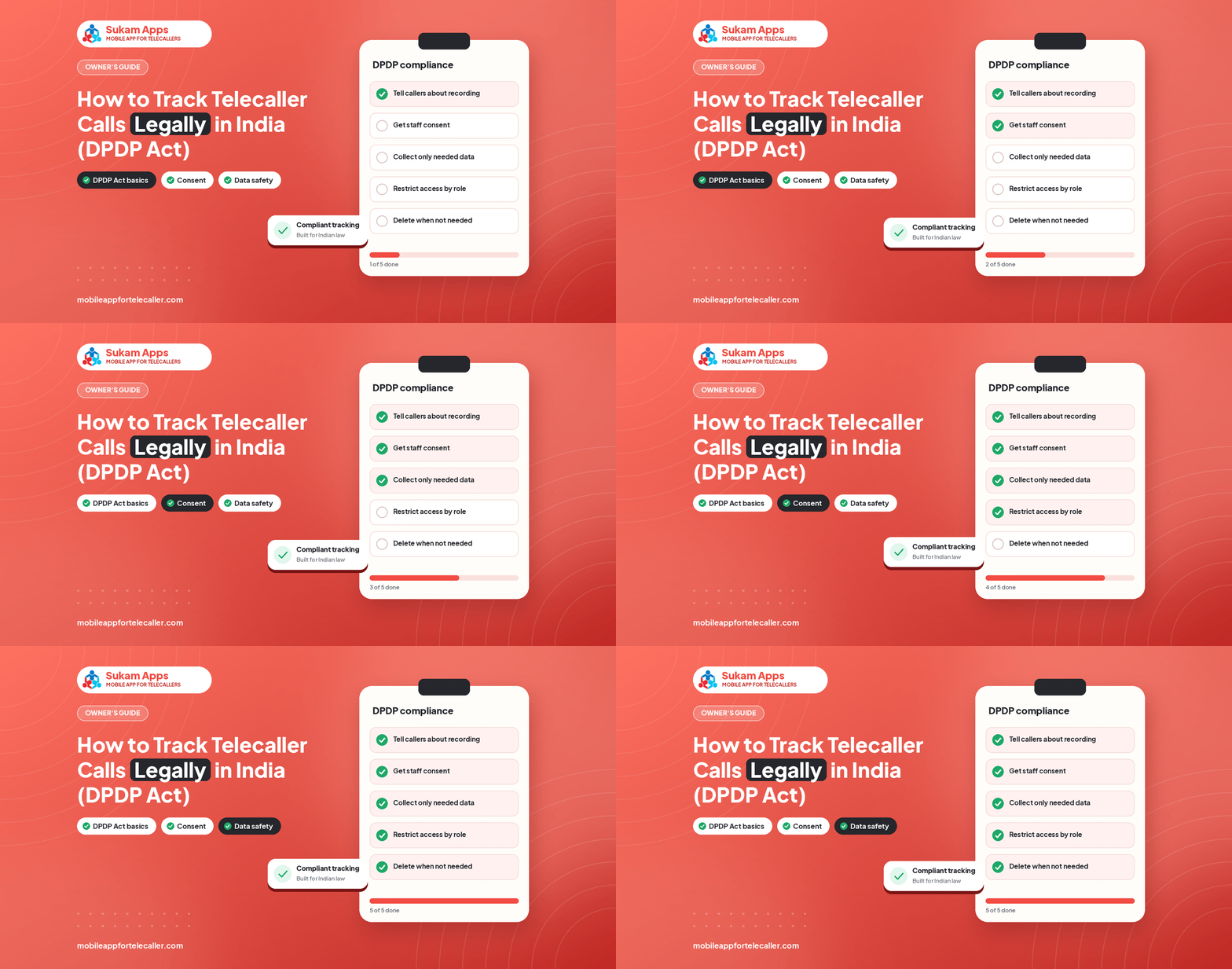
Most business owners want the same thing: to know how many calls their telecallers make, how long they talk, and what they promise customers. Doing this is normal business practice. Doing it carelessly can create trust and legal problems. This guide covers the practical steps. It is general information, not legal advice, so confirm details with your lawyer.
Who handles call recording? Sukam Tele CRM does not record calls itself. Call recording is a built-in feature of the phone and its Android software (Samsung, Oppo, Vivo and other makers). The phone maker provides it and takes the user’s consent when the feature is turned on. Sukam Tele CRM only shows and organises the recordings your phone has already saved, so you do not need any extra document or legal paper from us to use it.
1. Track business calls on business SIMs
Limit tracking to calls made and received on the SIM the company gives for work. Personal numbers and personal phones should be excluded. A good call tracking app lets you pick the business SIM and ignore the rest.
2. Put it in a written policy
Tell staff in writing, before you switch tracking on, what is tracked (call logs, talk-time, recordings), why (training, quality, dispute handling), who can see it, and how long it is kept. Get a signed acknowledgement with the appointment letter or as an addendum.
3. Call recording comes from the phone, not the app
The recording itself is done by the phone’s own call recorder, and whether it is available depends on the phone maker and the Android version. Sukam Tele CRM does not switch recording on or record the call. It simply lists the recordings your phone has saved, next to the lead and call log, so managers can review them. The same rules for staff awareness, limited access and safe storage in the sections below still apply to how you use those recordings. If your work is in finance or insurance, ask your lawyer whether you also need a short notice such as “this call may be recorded for quality”.
4. Limit who can listen
- Give recording access only to managers and owners.
- Mask customer numbers where staff do not need to see them.
- Restrict downloads and exports to owners.
- Keep a log of who accessed what.
5. Keep data safe and delete it on schedule
The Digital Personal Data Protection Act, 2023 puts duties on organisations that handle personal data, including notice, purpose limitation and reasonable security safeguards. Store recordings in the company account on secure hosting, decide a retention period, and delete on schedule. Check the current rules and timelines with your advisor, as implementation details may change.
6. Use the data to coach, not to punish
Teams accept tracking when it is used to help them: playing the best calls in training, fixing common objections, recognising good performers. Monthly review of three recordings per telecaller works better than hunting for mistakes.
A simple owner checklist
- Written policy and staff acknowledgement.
- Business SIMs only; personal numbers excluded.
- Customer notice on calls.
- Role-based access and number masking.
- Retention period and deletion routine.
- Regular coaching sessions based on recordings.
See this running on your own lead list
Sukam Tele CRM runs on your telecallers’ own SIMs: auto dialer, call recording, follow-ups and a live owner dashboard. 7-day free trial, setup done by our team.
Related: Employee call tracking app · Call recording app for sales teams